News

AIRE Club Puts High-Performance Computing in the Spotlight
AIRE Club brought high-performance computing (HPC) into focus, highlighting a technology for which the first real needs are already emerging among Estonian manufacturing companies.
What is HPC and when do you need it?
HPC refers to high-capacity computing systems and clusters where many computing nodes, processors and often GPUs work together to solve computationally or data-intensive tasks significantly faster than a standard workstation could. HPC is used in simulations, modelling, data analysis and training AI models, among other applications.
According to Rainer Liis and Ülar Allas from the Estonian Scientific Computing Infrastructure (ETAIS), HPC has a straightforward formula: large data volumes plus speed. As the amount of data in the world continues to grow, high-performance computing is becoming increasingly important.
Liis and Allas pointed out that fewer than 10% of companies in Europe currently use HPC, even though that figure could realistically be closer to 50%. The main barriers are a lack of awareness and doubts about return on investment — despite the fact that HPC speeds up business processes and reduces costs.
In the view of the ETAIS representatives, the return on HPC investment is substantial: every euro put in should bring back between three and twenty euros. Examples of use cases included drug discovery — where thousands of molecular compounds can be analysed simultaneously — supply chain analysis and financial risk simulations.
One of the most significant recent trends is the replacement of physical prototypes with computer simulations. This allows products to be tested under a wide range of conditions and faults to be identified much earlier, before they surface in real production and drive up costs.
Formula Student shows what’s possible
Hardi Hakk, a student at the Estonian Aviation Academy, shared an example of how Formula Student uses HPC. Formula Student is an international engineering design competition where teams build a new racing car each year — a process that takes around nine months and involves nearly a thousand people.
To study aerodynamics and develop the car, the team uses a virtual wind tunnel. With HPC, the Formula Student team completed a full range of simulations in nine months; the same work on a standard eight-core computer would have taken over 25 years.
The more simulations an engineer can run in a day, the more development iterations are possible — that is the core value of HPC in engineering.
Quantum computers are the next step
Looking further ahead, the future of simulations lies in quantum computers, which are based on quantum mechanics and use qubits instead of classical bits. This opens up possibilities that cannot be achieved with classical computing within any reasonable timeframe.
AIRE supports companies taking their first steps
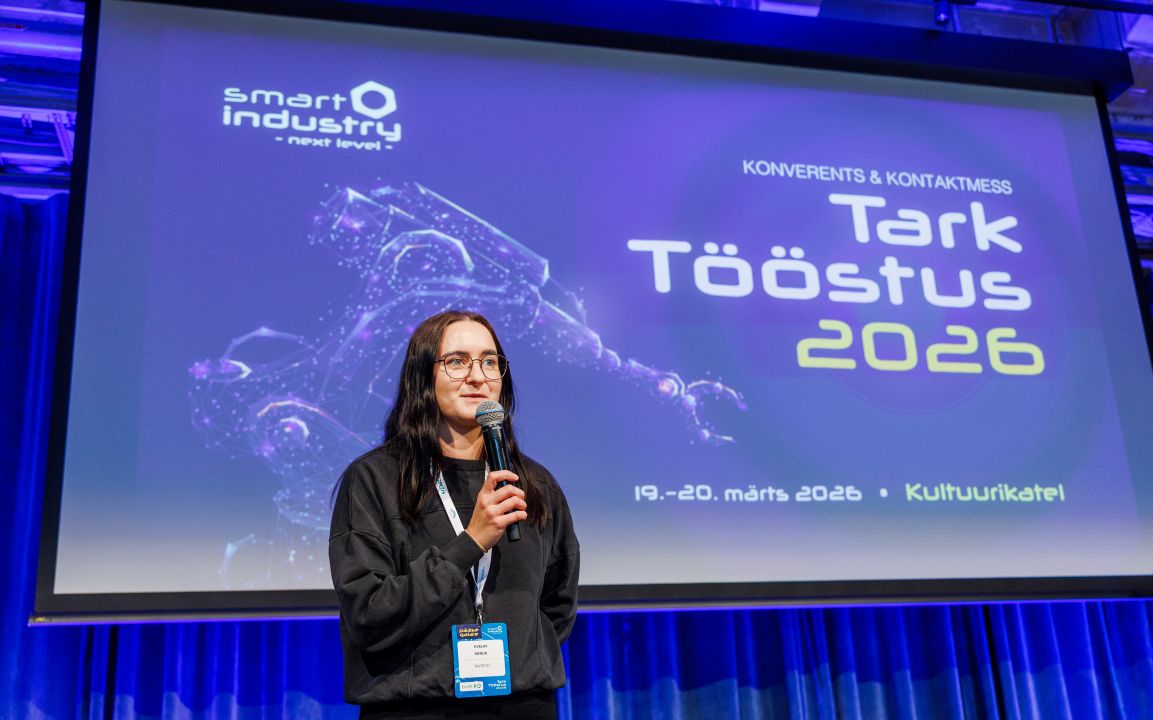
According to AIRE Head of Client Relations Evelin Ebruk, AIRE offers companies the opportunity to trial a computing cluster and supports them in carrying out HPC feasibility analyses. She illustrated this with an analogy: “If the goal is to build a taxi fleet, we help get the first taxi on the road.”
Among the HPC success stories highlighted were Estonian companies Icosagen, Bolt, BaBayte, KappaZeta, Celvia, GScan and Luisa Translation Bureau.
Share this entry