News

AIRE Club at Tsenter: labour-intensive production is not sustainable in Estonia in the long run
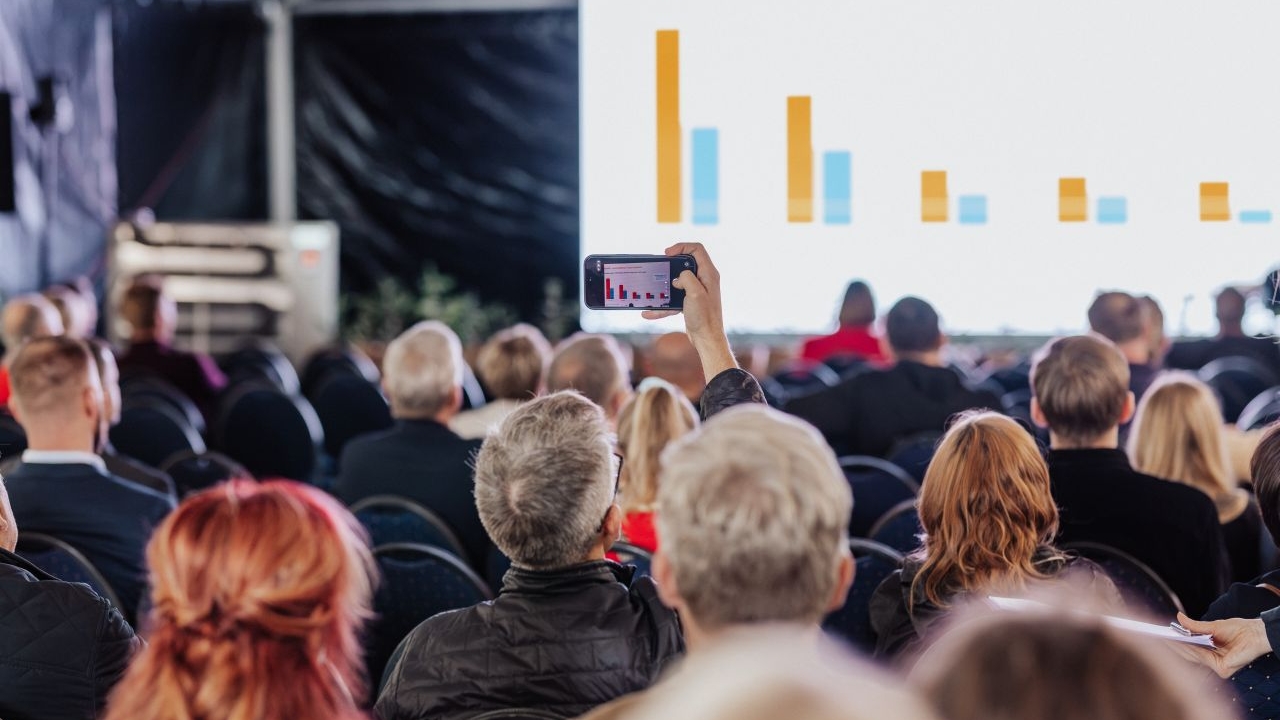
AIRE held its club event at the Tsenter wood competence centre in Väimela, as part of the third edition of Robofest. This time the focus was on how investment, automation and artificial intelligence help Estonian industry stay competitive. All three speakers arrived at the same point that investing in technology can no longer be optional, it is now a precondition for productivity and growth.
Investment is the engine of productivity
The club was opened by Raul Kirsimäe, head of Swedbank’s industrial sector team. He noted that Estonian industrial output grew steadily until 2021, after which it declined, and the sector has not fully recovered since. The biggest concern for business leaders is competitiveness. Although productivity has increased, added value has not recovered at the same pace, and investments have actually taken a fall, even though more of it is exactly what is needed.
Kirsimäe stressed that labour-intensive production is not sustainable in Estonia in the long run, since labour is in short supply and labour costs have risen faster than in Lithuania, Latvia or Poland, for example.
Globally, the countries leading the way in robot use are South Korea, Singapore, Sweden, Denmark and Switzerland, where the economy as a whole is also performing strongly and the impact of technology use is clearly visible in productivity growth.
He also referred to an analysis carried out by the bank of ten years of EBITA margins among large industrial companies. It showed that the companies investing most actively are the more profitable ones, which put more effort into efficiency, apply automation and digitalisation more widely, and at the same time work more closely with research institutions, for which he recommended using the Adapter platform.
“Standing still is a state that precedes death,” Kirsimäe said, adding that investment increases not only production capacity but also goes hand in hand with higher productivity and greater added value.
Wermo’s experience: a robot becomes part of the team
Karl Kask, digitalisation project manager at Wermo, shared the company’s experience of introducing a robot to tend a drilling machine, which was meant to be an affordable, low cost solution. He described how the first steps of robotisation were carried out and how staff were prepared to work with the robot. The operators’ attitudes went through several stages, from initial excitement to early disappointment, before finally reaching satisfaction and trust.
From the integrator’s point of view, Kask said, the key to success is a clear brief and a focus on the solution, which leaves more room for development and testing. He also made an interesting observation: manufacturers are often more wary of the end customer than of the technology itself, and prefer to communicate through the robot integrator.
As an example, he described the introduction of sawing robots at Wermo in spring 2025. Tiksoja Puidugrupp, which already had experience with a similar saw, helped with this. Setting up the system still took time and had to be adapted to the needs of Wermo’s own factory and production. The programme had to be rewritten and the grippers replaced, since the materials used come in different thicknesses.
Development work and adjustments are still ongoing, but awareness of the processes within the company has improved considerably as a result, and testing new materials and settings has become easier. According to Kask, the biggest challenge is the sheer number of choices available. Whereas customers used to be able to say themselves what they needed, robot integrators now have to decide for themselves what needs to be done.
Nerostein: rapid growth creates a need for automation
Herman Leis, quality specialist at Nerostein, spoke about the company’s journey towards its recent cooperation agreement with AIRE. Nerostein manufactures worktops from stone and composite materials, and the company grew by 61% in the last financial year. Rapid growth, combined with a strong sales team bringing in large clients, in turn puts significant pressure on production and design processes.
Leis, who previously spent eight years working as a measuring technician and visiting clients’ homes himself to take measurements, came into contact with researchers at TalTech. Through them, he arrived at the idea of bringing artificial intelligence into the process, which led him to approach AIRE to test possible ideas as part of a demo project.
In the longer term, Nerostein sees potential in mapping and optimising the entire production process, analysing what is done at each stage, what works well and what does not, and using this to draw up clear ground rules.
Asked what skills future employees will need, he said that, above all, the company needs engineers with experience in both robotics and software development.
In summary
Three very different presentations arrived at the same conclusion: competitiveness grows hand in hand with investment, automation and the application of artificial intelligence. AIRE will continue to support industrial companies on their way towards smarter and more productive production, through demo projects and AI consultations.
Photo: byAndeli OÜ
Share this entry