News


Investment Is Key to Industrial Competitiveness, but Estonian Companies Remain Cautious
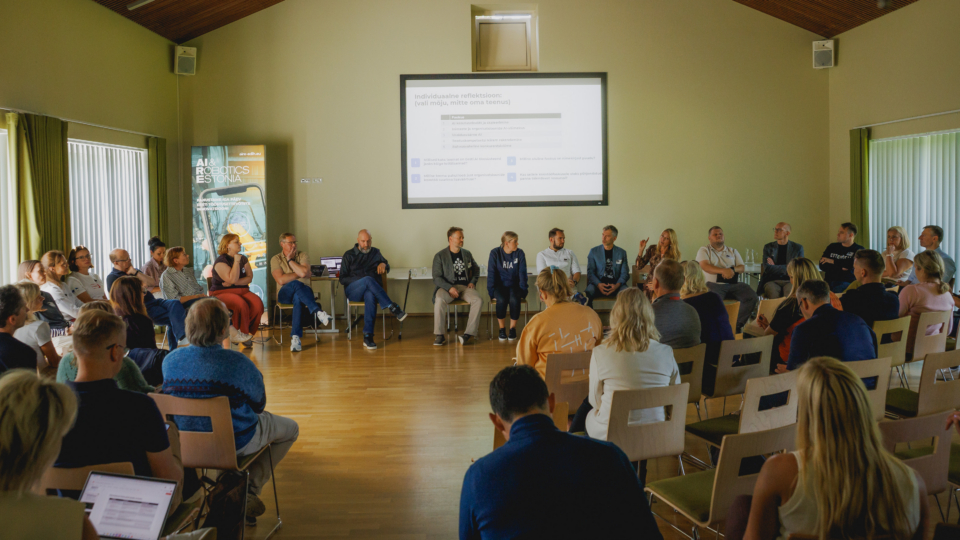
At the AIRE Club held during Robofest, Raul Kirsimäe, Head of Industry at Swedbank, warned that low investment levels are holding back the competitiveness of Estonian industry. At the same time, the bank’s data shows that companies investing actively achieve significantly higher profit margins.
Estonian industrial output grew until 2021, but the outbreak of the war in Ukraine interrupted this trend, and output has yet to return to its previous level. According to Raul Kirsimäe, the long-term picture is positive: industrial value added has doubled in nominal terms over the past fifteen years and increased by approximately 50% when adjusted for inflation.
“Developments over the past four years, however, give cause for concern, as growth has stalled. The same applies to investment. In nominal terms, investment has remained roughly stable, but adjusted for inflation, it has declined in Estonian industry in recent years,” said Kirsimäe.
According to Kirsimäe, this is paradoxical because the need for investment has actually increased as robotics solutions develop rapidly and their potential applications expand. “We must also recognise that labour-intensive business models are no longer sustainable given Estonia’s demographic outlook. We need to think about how to achieve more with our existing teams than we did yesterday.”
The world is moving faster
International comparisons show that Estonia has room for improvement. South Korea has more than 1,200 robots per 10,000 employees, while Singapore has over 800. These countries were already leaders in robot adoption eight years ago and have since increased their use of robots by 50–130%.
According to Raul Kirsimäe, this is a moment for honest reflection in Estonia and a chance to ask whether we can keep pace. “Do we want to carry on as before, or should we significantly accelerate investment? Various studies show that introducing even a single technology, such as a robot, can increase productivity by around 7–8%. Combining several technologies can deliver gains of several tens of per cent.”
What the bank’s data shows
Swedbank analysed ten years of financial data from Estonian industrial companies. The companies were divided into four groups according to their investment activity. The group investing most actively had an EBITDA margin twice as high as the group investing the least. EBITDA stands for earnings before interest, taxes, depreciation and amortisation.
Kirsimäe stressed that caution is needed when drawing conclusions about causality, as profitable companies also have more money available to invest. Nevertheless, the relationship has remained consistent and strong over the ten-year period.
The more successful companies share several characteristics. They:
- have higher levels of digitalisation and automation than average;
- invest more in efficiency and technology;
- collaborate more with research institutions;
- forecast stronger growth year after year.
Where companies are investing
Improving efficiency is the main investment objective for Estonian industrial companies, often alongside increasing production volumes. Product development has generally become less of a priority over the years, although the past year brought a slight improvement. According to Kirsimäe, this is concerning because, in the longer term, companies need both more efficient production and higher-value-added products.
The share of total investment allocated to automation and digitalisation has risen to approximately one-third, and even higher in some sectors. Raul Kirsimäe expects technology to account for an increasingly large share of industrial investment, while the share spent on buildings and other physical infrastructure will decline.
Medium-sized and large companies have made good progress in digitalisation, but small and medium-sized companies with annual turnover of €1–10 million have fallen behind in automation. In Kirsimäe’s view, these companies have the greatest scope to take the next step.
For the second consecutive year, artificial intelligence is the leading area of interest for technology investment among industrial companies: more than half plan to invest in AI solutions within the next two years. In industry, this means more than buying a chatbot licence. It includes production planning, warehouse management, coordination between machines and customer communication. Just over one-third of companies plan to invest in industrial robots, a figure Kirsimäe considered surprisingly modest given the demographic outlook.
What companies can do
Kirsimäe’s message to business leaders was clear:
- Take the investment backlog seriously. Declining investment weakens a company’s market position and competitiveness.
- Plan for rising wages and a shrinking population. Companies can no longer rely on a labour-intensive business model.
- Technology is not an end in itself. Digitalisation and robotisation are tools for increasing value added and competitiveness.
- Make use of collaboration networks. Research institutions, AIRE and Adapter help companies achieve tangible results through change and the adoption of technology.
- Bring your investment plans to the bank. According to Kirsimäe, the bank is ready to support well-considered plans that help companies improve their performance and competitiveness.
Kirsimäe concluded with a thought he had heard from an experienced industrial executive as a young banker and has carried with him ever since: in industry, standing still is a prelude to death.
AIRE and Swedbank will continue working together to strengthen Estonia’s competitiveness.
Share this entry