News

Are Companies Ready for the AI Era? The AIRE Club Looked for Answers Together with Entrepreneurs
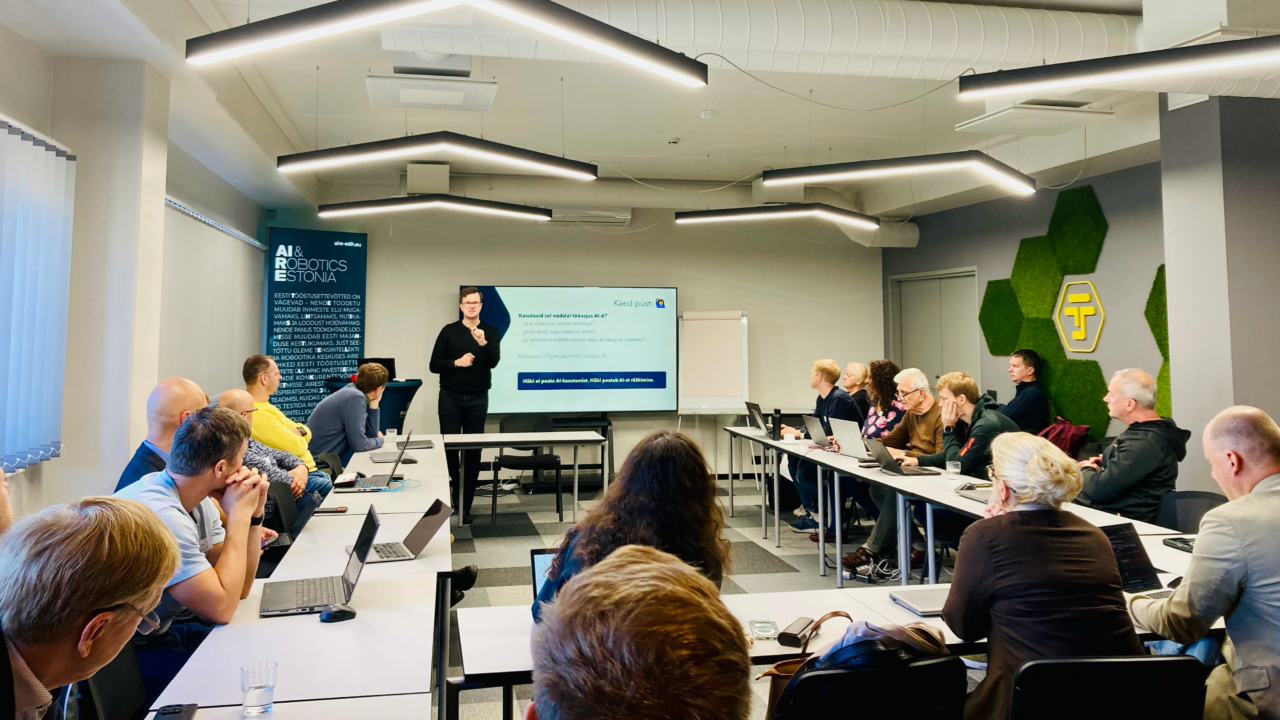
On 7 October, the 58th meeting of the AIRE Club took place at Sparkup Tartu Science Park, where participants discussed how ready Estonian companies are to adopt artificial intelligence. Attendees came from a wide range of fields, from construction and design to drones and forestry. The discussion showed that artificial intelligence is no longer the exclusive domain of technology companies.
AI is a tool, but responsibility remains with people
A key takeaway from the discussion was that artificial intelligence is a new tool that people need to learn how to use. AI makes mistakes too, but responsibility for the results always lies with the person using the tool.
The user of an AI tool:
- is responsible for the results, regardless of who wrote the first draft;
- checks the output in proportion to the risk;
- discloses the use of the AI tool;
- protects data by using only approved tools;
- shares what works with others.
The quality of work depends on four factors
The quality of work done with AI can be described with a simple formula:
AI model × application environment × context × tools.
Each company shapes the last two of these four factors itself. Context means skills and data obtained through connections, while tools are solutions that link AI to the company’s own systems, for example via MCP. It is therefore worth choosing a capable AI tool that suits your needs, and remembering that AI’s first answer is a draft, not the final truth.
Test before you invest
Could artificial intelligence or robotics solve a problem in your company? The AIRE demo project lets manufacturing and industrial companies test new solutions with a development team in their own working environment before making a larger investment.
Companies can test, for example, machine learning, machine vision, robotics, predictive maintenance and digital twins, and combine these solutions with one another. The project’s direct costs are covered by state aid. Even a test result showing that a solution is not right for the company helps it make better-informed decisions later.
The first step is a pre-consultation, which determines whether and how your idea fits a demo project.
Share this entry